


 Peru
Peru


Trends and Opportunities for Peruvian Superfoods from TUTTOFOOD Milano 2026
Functional nutrition, private labels, convenience, regenerative agriculture, and new retail models shaped the agenda at TUTTOFOOD Milano 2026, where the Lima Chamber of Commerce (CCL), with the support of SIPPO Peru, generated market intelligence to strengthen the internationalization of Peru’s export offering.
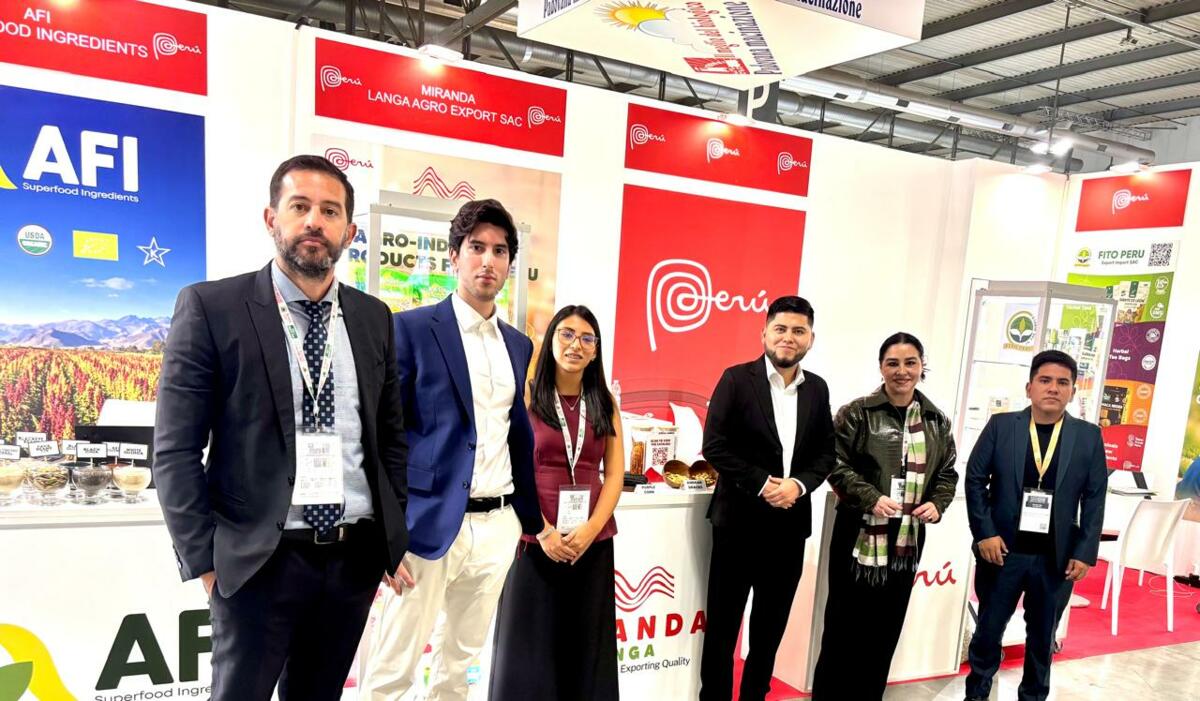
TUTTOFOOD Milano 2026, one of Europe’s leading agrifood trade fairs, brought together more than 5,000 exhibiting brands, approximately 4,000 strategic buyers, and over 100,000 professional visitors from around the world. In this context, the Lima Chamber of Commerce (CCL), with the support of SIPPO Peru, accompanied the participation of Peruvian companies OREPAM, Fito Perú, AFI, and Miranda Langa with an objective that went beyond trade promotion: to use the exhibition as a market intelligence platform to identify trends, validate opportunities, generate strategic contacts, and strengthen the internationalization support services offered by the CCL.
The mission was carried out under a SIPPO-driven approach that views international trade fairs as strategic intelligence platforms. Rather than simply exhibiting at a stand, this methodology seeks to transform every interaction with buyers, competitors, experts, and industry leaders into valuable information for decision-making. Through pre-fair preparation, benchmarking, networking, conference participation, and structured information gathering, trade fairs become opportunities to validate market hypotheses, identify emerging opportunities, and develop more relevant services for exporting companies.
One of the most significant findings was the evolution of consumer trends in Europe. The food sector is moving beyond a focus on healthy products toward a broader vision of functional nutrition and preventive health. Consumers are increasingly looking for foods that actively contribute to specific goals such as energy, immunity, digestive health, mental well-being, longevity, and metabolic balance. This trend represents a natural opportunity for Peru, whose portfolio of superfoods and functional ingredients—including maca, lucuma, oregano, camu camu, cacao, quinoa, and various berries—is well aligned with the growing demand for wellness solutions supported by natural and functional attributes.
The fair also confirmed that concepts such as clean label, traceability, and sustainability are no longer differentiating factors but have become basic market entry requirements. European buyers are seeking recognizable ingredients, transparency, certifications, and verifiable evidence to support product claims. This creates an opportunity for Peruvian exporters to transform their biodiversity and origin into compelling value propositions backed by technical information, certifications, and strong commercial narratives.
Another key trend was the growth of so-called premium convenience. European consumers are increasingly demanding ready-to-eat and easy-to-prepare products, healthy snacks, single-serving formats, and solutions that combine practicality, quality, and well-being—ready to eat, ready to go. This creates opportunities for Peruvian companies to move beyond the export of raw materials and ingredients toward higher value-added products that incorporate innovation, convenience, and differentiation.
Likewise, the Food Manifesto presented during the fair highlighted a deeper transformation of the global food system. The conversation is no longer focused solely on food production but also on regenerating food systems, strengthening social inclusion, protecting biodiversity, and building trust through traceability and transparency. This vision aligns particularly well with Peru’s value proposition, which is rooted in biodiversity, origin, family and environmentally sustainable agriculture, rural communities, and products with a strong territorial identity.
One of the most relevant topics discussed at the Cibus Link Hall was the evolution of private labels in Europe. Leading retailers agreed that private-label brands are no longer competing solely on price but have become platforms for innovation, sustainability, health, convenience, and premiumization. Today, many European retail chains are developing gourmet, organic, functional, and healthy product lines under their own brands, seeking suppliers capable of innovating, ensuring traceability, and developing products tailored to specific consumer needs. For Peru, this trend represents a strategic opportunity. The country’s wealth of functional ingredients, superfoods, organic products, and foods of origin positions Peruvian companies favorably to participate in private-label programs in both Europe and Latin America, enabling faster and more scalable entry into international markets.
Presentations on European and Latin American retail also revealed a convergence of trends across both regions: more rational consumers, growth in private labels, greater segmentation of retail formats, intensive use of data, and rising demand for value-added products. In this context, Peru was presented as an attractive market for investment thanks to its economic stability, sustained growth, increasingly sophisticated consumers, and internationally recognized gastronomy.
The experience at TUTTOFOOD Milano 2026 confirmed that international trade fairs are strategic tools for strengthening export competitiveness when they are used as platforms for learning, intelligence gathering, and relationship building. For SIPPO Peru and the Lima Chamber of Commerce, the results of this mission reinforce the importance of continuing to strengthen methodologies that transform market information into concrete services, capabilities, and opportunities for Peruvian companies interested in expanding internationally.
